Since 1885, Boys & Girls Aid has helped create thousands of permanent, loving families through adoption. As this year’s National Adoption Month and our 140th Anniversary celebration come to a close, we’d like to share a firsthand story highlighting the impact adoption had on a Boys & Girls Aid family nearly a century ago.
For our final National Adoption Month story, we’re sharing the transcript of a 1945 speech delivered at the agency’s 60th annual meeting by “Mr. R.,” whom, together with his wife, adopted two children through the Boys & Girls Aid Society of Oregon. * As you’ll read in his story, something that remains just as true today as it was in 1945 is our commitment to the Boys & Girls Aid mission of ensuring children find permanent, loving families and lifelong connections.
*Names, photos, and select details have been changed to protect the family’s privacy.
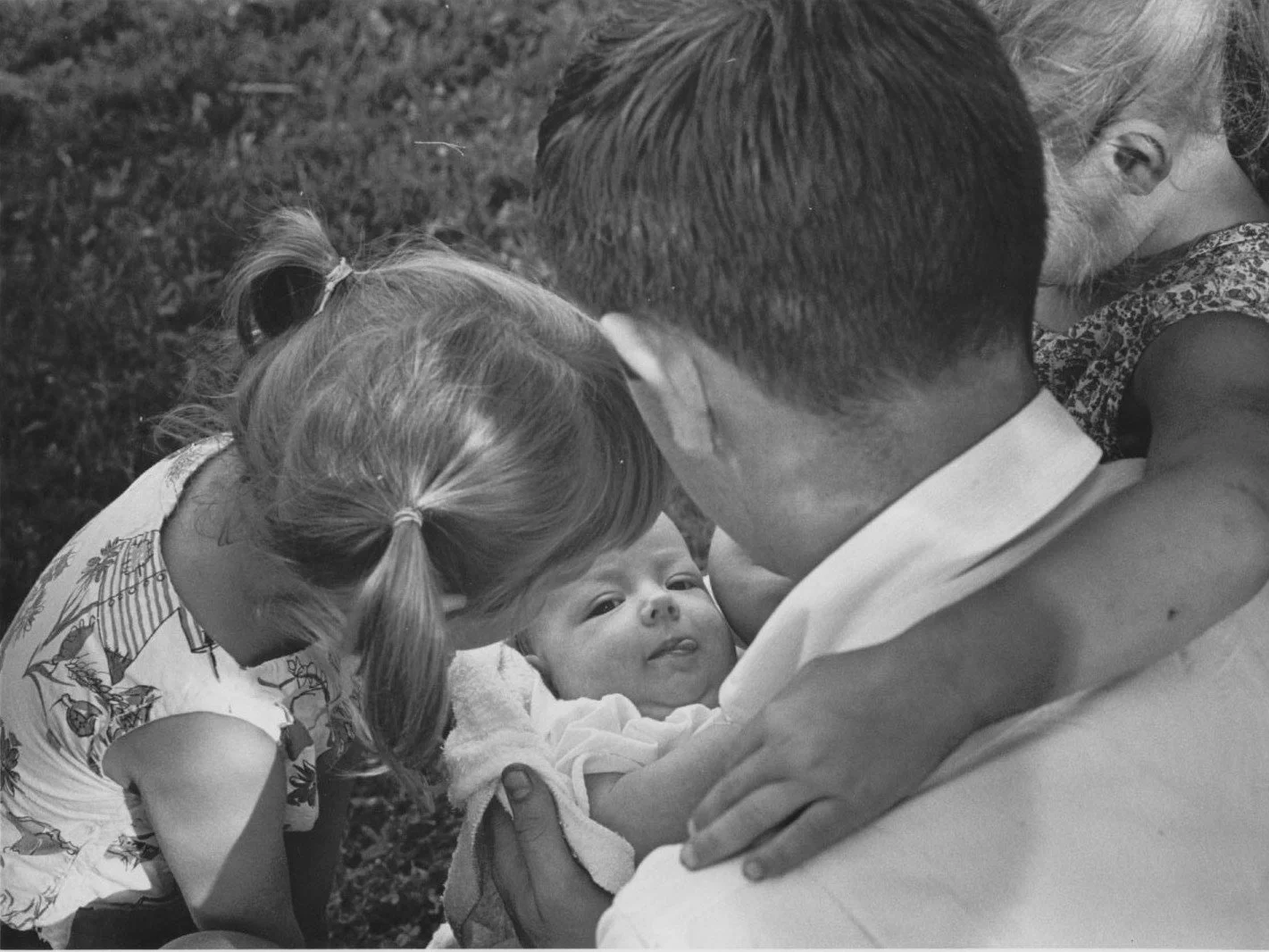
Photo courtesy of the Boys & Girls Aid Historical Archives.
Thank you, Mr. Stimmel, and thank you, ladies and gentlemen.
I feel it’s a real privilege to be here today because Mr. Stimmel has told me I may talk to you about our children. They’re a subject very close to our hearts, so perhaps I can share a few things that may interest you.
My wife and I are both teachers. Our choice of profession presupposes a love for children. At the time of our marriage, we hoped to have a family of three or more children. At the present time, thanks to the Boys & Girls Aid Society, that desire has been fulfilled.
Right here, I’d like to pause to say that we have the highest regard for the methods and reputation of the Society. Both in establishing our own family and in working with the Society’s representatives caring for children in our schools, we’ve found great understanding and genuine cooperation.
Our family consists of a daughter, Marjorie, who turned twelve yesterday. Marjorie had to have us for parents because she was born to us and had no choice in the matter.
Our second child is Emily, who will be ten in November and who adopted us just before Christmas in 1939, when she was four years old.
Our third child is our son, David, just one year old. After eight weeks of living with us, he’s decided he quite approves of the household. As for the rest of us, we can’t remember what it was like to live without him. It feels as if he’s always been the adored member of the family that he is today.
Emily was a sweet, dark-haired little girl—shy when she came to us. To illustrate, I’ve taken a few jottings from a diary my wife has kept. This also shows one of the challenges of adopting an older child: the need to provide language experience along with love and security.
“Today she was singing ‘Somewhere Over the Drainboerd.’ We showed her a rainbow, and since then she sings it right.”
“She says ‘great juice’ for grape juice.”
·“‘Anky Beller de Seller’ for ‘Barnacle Bill the Sailor.’”
She’s learning fast — all sorts of simple things she should know. She’s apparently having her first taste of nursery rhymes and traditional stories. We’re beginning with the simplest Mother Goose rhymes, trying to build her vocabulary. She’s becoming familiar with The Gingerbread Boy, The Three Billy Goats Gruff, The Three Bears, and she’s gradually improving her English.
Marjorie helps her, too — correcting “ain’ts” and “done’s.” Emily is learning rapidly. She knows quite a few nursery rhymes now and insists on a nightly bedtime story.
Her English is still rough, but we keep at it. Now she sometimes corrects herself. One day, Daddy spent half an hour teaching her to say “My dog doesn’t bite” instead of “My dog don’t bite.” Now she says, “Does your dog bite, Daddy? My dog doesn’t bite.”
Emily’s beginning to listen for the sounds of letters and words and to fix her pronunciation. One day I asked her to say “gloves” instead of “glubs.” She kept trying and finally said, “Oh well, I’ll just say mittens.”
“We’re building the kind of home where love grows.”
“Accident” is her new favorite word. She’ll say, “I had an accident—I hit my elbow.”
She was almost pitifully mature when she first came. She tied her own shoelaces, hung up her clothes, washed, dressed, and made her bed without suggestion. Marjorie, however, won’t stand for any domineering from her sister. They’ve worked it out between them and are more congenial than we could have hoped.
Three years ago, before Christmas, Emily said, “I wish we could have a baby for Christmas.” My wife replied, “But darling, do I look as if I could have one at that time?” Emily looked her over carefully and said, “No, but you could adopt one.”
A few days later — without saying anything to me—she sent an application to your office for another baby. It was a long wait, but this June, when we told the girls their baby brother was finally arriving, their enthusiasm was boundless. The day he came, I telephoned home, and Marjorie said, “Hurry home, Pop — you’re a father again.”
The effect of David’s arrival has been wonderful to watch. Marjorie is a careful, motherly little girl. Emily is an adoring sister. She’s made drawings on the kitchen bulletin board labeled “David” — and another labeled “Johnny.”
“Johnny” is the other little boy we hope to have someday. We’re building the kind of home where love grows — so perhaps someday we’ll look for “Johnny,” too.
Although nearly 80 years have passed since this speech was first delivered, one thing has never changed: Boys & Girls Aid’s dedication to creating permanent, loving families through child-centered adoption. As Oregon’s first and longest-running child welfare agency, we remain a trusted resource for children, youth, and families — and with your support, that legacy can continue for generations.
In honor of National Adoption Month and our 140th Anniversary year, we hope you’ll consider making a tax-deductible donation to Boys & Girls Aid. Your generosity ensures we can continue creating families through foster care and infant adoption for years to come.